





- New
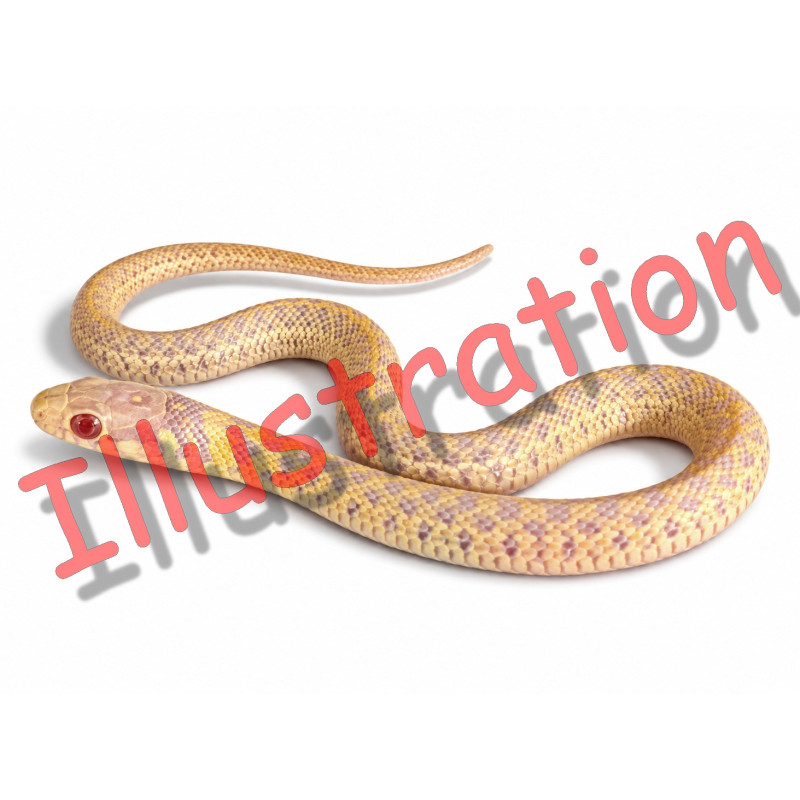



Nom scientifique : Thamnophis marcianus
Français : Couleuvre à damier
Anglais : Checkered Garter Snake
Allemand : Karierte Strumpfbandnatter
Néerlandais : Geblokte Kousebandslang
 15-day money-back guarantee! (excluding animals)
 Delivery with tracking number; guaranteed breakage-free or 100% money back!
 Deliveries only to Belgium, France, Luxembourg, Hamm (DE) and Houten (NL)
• Newborn (+/- 0 to 3 months): approximately 24 × 18 × 7 cm, such as a 3-litre Braplast container.
• Juvenile (+/- 3 to 6 months): minimum 30 × 30 × 30 cm.
• Subadult (+/- 6 to 18 months): minimum 45 × 45 × 45 cm, ideally 60 × 45 × 45 cm.
• Adult (18 to 24 months and older): minimum 90 × 45 × 45 cm for one adult. For each additional adult snake, increase the floor area by 20%.
Note: These dimensions are husbandry recommendations rather than absolute biological requirements. Providing the largest possible floor area should always be the objective. The MINIMUM terrarium size is determined according to the snake's length: snake length = terrarium width + depth.
• Terrarium type: A well-ventilated, escape-proof terrestrial enclosure (openings smaller than 1 mm for newborns!) and sufficiently long to establish a thermal gradient.
• Dimensions: See the recommended dimensions above. Young snakes should not be housed in an excessively large enclosure without sufficient hiding places. For adults, however, the largest possible terrarium is always preferable to provide adequate space for activity.
• Substrate: Lignocel, natural soil without fertilisers or pesticides, a soil/potting-soil mixture without additives, absorbent paper, etc., with a depth of 5 to 10 cm to allow the snake to partially bury itself under the substrate. Part of the substrate may remain drier, while another area provides a slightly more humid microclimate.
• Setup: Hides (caves, opaque boxes, bark, sufficient substrate depth for burrowing, etc.) and a large water bowl allowing the snake to submerge completely. Natural or artificial vegetation, low branches and elements providing access to different levels may also be included. Provide several hides throughout the different thermal zones, including a warm resting area and a cooler area.
• Note: Thamnophis regularly ingest substrate particles that stick to their food. Fine sand, dusty substrates, wood shavings, chemically treated substrates and materials that can easily be swallowed must therefore be avoided. Young snakes are particularly active and must be able to reach a hiding place quickly. A well-structured enclosure provides numerous safe areas without restricting movement.
• Daytime ambient temperature: approximately 22 to 26 °C.
• Warm-side temperature: approximately 27 to 29 °C.
• Basking spot temperature: approximately 30 to 32 °C, locally beneath the heat source.
• Night-time temperature: ideally around 20 to 22 °C, avoiding excessive cooling.
• Heating system: A thermostat-controlled heat mat covering part of the floor at one end of the terrarium and/or a heat lamp.
• Thermal gradient: A warm area must be available at one end of the terrarium, while the opposite end remains noticeably cooler, allowing the snake to regulate its own body temperature.
• Special consideration: Avoid maintaining a uniformly high temperature throughout the enclosure. This species inhabits regions with varying climatic conditions. It must have access to both a warm resting area and a cooler zone. In the hottest parts of its range, it may also become predominantly crepuscular or nocturnal.
• Daytime humidity: approximately 40 to 60%, with natural variations throughout the different areas of the terrarium.
• Night-time humidity: approximately 50 to 65%, without keeping the substrate permanently waterlogged.
• Hydration: Permanent access to clean water; the snake must also be able to submerge itself regularly.
• Water: A large, stable water container, sufficiently deep to allow the snake to submerge completely while remaining easily accessible. Change the water regularly and immediately whenever it becomes soiled.
• Special consideration: Thamnophis marcianus naturally inhabits areas around ponds, rivers, marshes, springs and irrigation channels, including in arid and semi-arid regions. Permanent access to a sufficiently large water container is therefore essential. However, high humidity is not a substitute for proper hydration.
• Ventilation: Effective and permanent ventilation is essential to prevent stagnant air, excessive moisture accumulation and mould growth.
• UVB lighting: Low to moderate UVB lighting is recommended but not essential, with an exposure area allowing the snake to regulate its own UVB exposure. UVB is not necessarily an absolute requirement when a properly balanced diet is provided, but it is particularly relevant for this species, which is active during the day and twilight periods.
• Lighting: LED lighting or a fluorescent tube providing bright, white daylight during the day.
• Photoperiod: approximately 10 to 14 hours of light per day, gradually adjusted according to the seasons.
• Newborns and juveniles: Whole live or chopped earthworms (not compost worms!), thawed baby mice or rats, offered whole or chopped according to the snake's size, and appropriately sized dead or live fish. Particular care must be taken to avoid fish containing thiaminase. Examples of fish without thiaminase include trout, salmon, guppies, big-scale sand smelt (Atherina boyeri), pond smelt (Hypomesus olidus), etc. The diet must be varied and adapted to the animal's size.
• Subadults and adults: A varied diet similar to that of juveniles, but consisting of whole prey items. Suitable amphibians may also occasionally be offered, provided their health status and origin are fully controlled.
• Feeding frequency: Newborns: approximately every 2 to 3 days; juveniles: approximately every 3 to 5 days; subadults and adults: generally every 5 to 7 days. Adjust according to the snake's body condition and the type of prey offered.
• Special consideration: Dietary variety is essential. A diet consisting exclusively of fish must be avoided, as some fish contain thiaminase, an enzyme that causes vitamin B1 deficiency. Fish should not be the sole staple food because they do not necessarily provide all the nutrients required. Rodents and earthworms are good staple food sources. In the wild, this species also consumes fish, amphibians, tadpoles, small lizards and invertebrates.
• Supplements: A varied diet based on appropriately selected whole prey generally does not require routine supplementation.
• Hydration: Fresh, clean water must always be available in a container large enough to allow the snake to bathe. Change the water regularly and immediately whenever it becomes soiled.
• Safety: Under normal handling conditions, this species does not pose a danger to humans. Like other Thamnophis, however, it produces mildly toxic oral secretions that help it capture prey. A bite may cause a local reaction, particularly if the snake maintains its bite for an extended period. When threatened, these snakes may also release a strongly scented cloacal secretion.
• Handling technique: Pick up the snake carefully, avoiding sudden or rapid movements. Properly support its body by providing at least two points of support (between your fingers, with both hands, etc.), without ever squeezing its body. Never hold the snake by its tail.
• Special consideration: Young snakes can be particularly fast and nervous. Regular, appropriate handling may gradually help them become calmer, but it should remain limited and respect periods of stress, shedding and digestion.
• Hygiene: Thoroughly wash your hands before and after handling the snake or cleaning its enclosure. Regularly clean and disinfect soiled equipment.
• In captivity: A seasonal rest period may be provided for healthy adult animals, particularly when breeding is intended. Its importance depends on the geographical origin of the specimens and the climatic conditions naturally experienced by their population. A deep winter brumation is not systematically essential for this species.
• Temperature: If a seasonal rest period is provided, temperatures should be reduced gradually over several weeks, taking the animal's geographical origin into account. A moderate cooling period may be appropriate, but temperatures of 5 to 8 °C should not be imposed automatically. The duration and temperature must be adapted to the health, age and preparation of each specimen. Never cool down an animal that is ill, underweight or insufficiently prepared.
• Photoperiod: Gradually reduce the lighting period according to the seasons. Completely switching off the lighting is not necessarily required.
• Feeding: Stop feeding sufficiently early before temperatures are reduced to allow the digestive system to empty completely. Fresh water must remain available at all times.
• Housing: If a separate resting enclosure is used, provide an opaque, well-ventilated and escape-proof container with suitable substrate that is slightly moist but never waterlogged. Access to drinking water must be provided.
• Breeding: The seasonal cycle can play an important role in stimulating reproduction. Mating generally takes place in spring. This species is viviparous, with births occurring mainly during summer, depending on the population and husbandry conditions.
• CITES status: This species is not listed under CITES.
• Document supplied with the purchased animal: Invoice stating the species name and, where applicable, its genetic morphs, the animal's origin (captive-born within the EU), its sex or the fact that it is sold unsexed, and its birth period. None of these animals is sold with a microchip, a CITES document or photographs.
• Documents required for purchase: NONE. In accordance with European and Belgian Flemish legislation, we are authorised to legally sell and deliver all animals lawfully offered in our online shop to anyone aged 18 or over. No specific administrative procedures, special documents or prior permits are required from our customers, regardless of the legislation in force in their country of residence.
• Delivery: Home delivery is available in Belgium, France and Luxembourg only! Delivery is also possible at certain reptile fairs: Hamm (Germany), Houten (Netherlands) and Insectopy (Belgium). Delivery to other countries is NOT POSSIBLE.
• Responsibility: The customer is solely responsible for ensuring that keeping the animal is legal and for completing any administrative procedures required in their own country.
Specific References
No customer reviews for the moment.
Nom scientifique : Thamnophis marcianus
Français : Couleuvre à damier
Anglais : Checkered Garter Snake
Allemand : Karierte Strumpfbandnatter
Néerlandais : Geblokte Kousebandslang