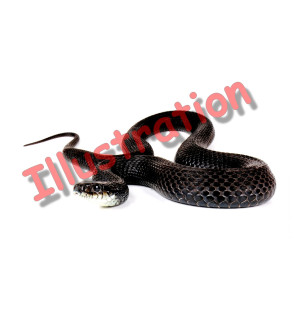
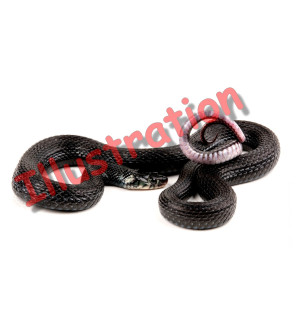
Thamnophis sirtalis sirtalis melanistic
✅ Species information
• General information: The melanistic form of Thamnophis sirtalis sirtalis, also known as the melanistic Eastern Garter Snake, is a colour variant of the nominate subspecies Thamnophis sirtalis sirtalis. It is not a separate subspecies, but a form characterised by particularly extensive black pigmentation. This diurnal, mainly terrestrial and partly semi-aquatic snake is native to North America.
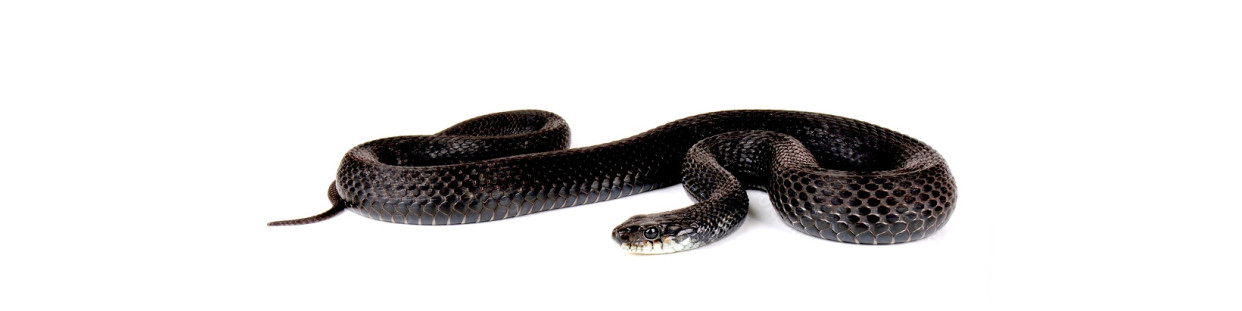
• Special features: Melanism results in an almost entirely black appearance, usually masking the light longitudinal stripes normally found in this subspecies. This colour variant is particularly well known in populations around Lake Erie, where melanistic individuals coexist with normally striped specimens. Melanism is an inherited trait.
• Geographical distribution: The nominate subspecies occupies a large part of eastern North America, from southeastern Canada to the southeastern United States. Melanistic individuals are particularly well documented around Lake Erie, in Ontario and Ohio, especially on certain islands and neighbouring coastal areas. They may also occur in other populations.
• Natural habitat: It is mainly found in wetlands and their surrounding areas, including marshes, ponds, riverbanks, wet meadows, woodlands and grassy areas. It can also inhabit more open environments and areas close to human settlements.
• Behaviour: Mainly diurnal, this snake is particularly active during sunny periods and regularly uses sunny spots for basking. It is a good swimmer and moves both on land and in water. During cold periods, individuals may gather in communal shelters to overwinter. When threatened, it may adopt a defensive posture and release an unpleasant-smelling secretion.
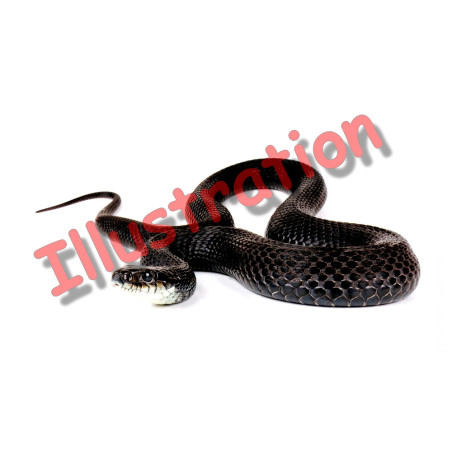
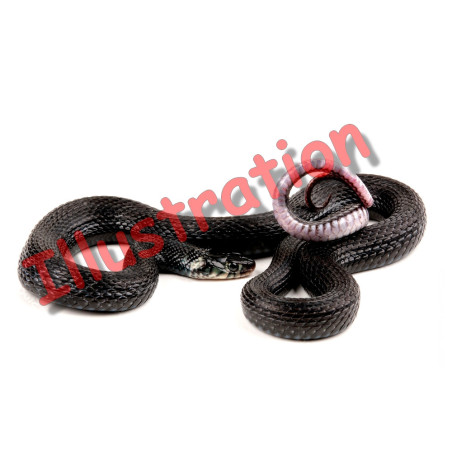
• Distinctive morphological features: The melanistic form has an almost uniformly black dorsal coloration, often deep and glossy black, sometimes with blue-black iridescence. The characteristic longitudinal stripes of the normally coloured form are generally absent or barely visible. The chin and throat often remain whitish, while the underside may be black or blue-black. The intensity of dark pigmentation can vary slightly between individuals.
• Sexual dimorphism: Females are generally larger and more robust than males. Males have a proportionally longer tail with a thicker base.
• Size: Adults generally measure approximately 45 to 80 cm in total length. Some individuals can exceed one metre. Their size is broadly comparable to that of normally coloured specimens of the same subspecies.
• Sexual maturity: Sexual maturity is generally reached at around 2 to 3 years of age, depending on sex, growth rate and developmental conditions.
• Lifespan: In captivity, this subspecies generally lives for approximately 6 to 10 years. Some individuals may live considerably longer under good captive conditions.