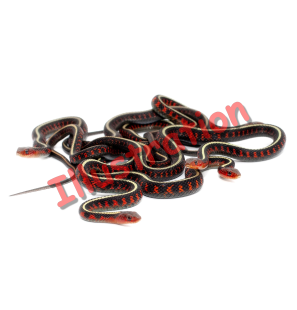
Thamnophis sirtalis concinnus
✅ Species Information
• General information: Thamnophis sirtalis concinnus, commonly known as the Red-spotted Garter Snake, is a subspecies of Thamnophis sirtalis native to the northwestern Pacific coast of North America. It is distinguished by characteristic reddish markings along the sides of its body, between the longitudinal stripes. It belongs to the family Natricidae.
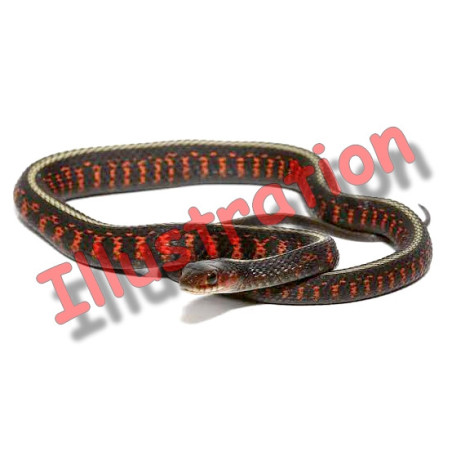
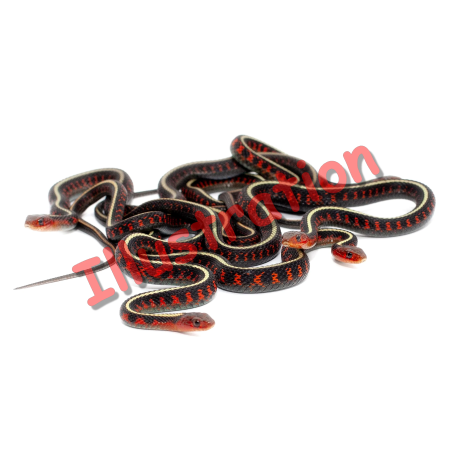
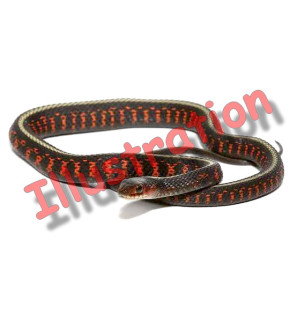
• Distinctive features: This subspecies is particularly recognizable by the red to orange spots that may form a series of markings along the flanks between the pale longitudinal stripes. Its coloration varies between populations and individuals. Its status as a subspecies is recognized by some taxonomic references, although recent genomic studies have questioned the traditional separation of several Thamnophis sirtalis subspecies.
• Geographical distribution: It is mainly associated with the northwestern Pacific coast of the United States, particularly western Washington State and Oregon. In Washington, it occurs in the Pacific Coast and southern Puget Trough regions. The precise boundaries of its range may vary depending on the taxonomic reference used.
• Natural habitat: It inhabits a variety of environments, including wet meadows, marshes, open woodland, stream banks, ponds and coastal wetlands. It favours habitats with dense vegetation, suitable hiding places and sunny areas for thermoregulation.
• Behaviour: Diurnal and generally active, this snake is a good swimmer and can be found both near water and in meadows or open woodland. Its diet is varied and includes amphibians, earthworms, slugs, fish and small invertebrates. Like other garter snakes, it is generally wary and prefers to escape when disturbed.
• Morphological characteristics: Its body is relatively slender and generally dark brown, olive or black. Three pale longitudinal stripes run along the body: one dorsal stripe and two lateral stripes, often yellowish or greenish. Characteristic red to orange spots occur along the flanks between the stripes and are the main distinguishing feature of this subspecies. Their intensity and arrangement vary between individuals.
• Sexual dimorphism: Females are generally larger and more robust than males. Males have a slimmer build and a proportionally longer tail. The base of the male's tail is also thicker due to the presence of the reproductive organs.
• Size: Adults generally reach a total length of approximately 40 to 70 cm. Considerably larger individuals are possible within Thamnophis sirtalis, but records for the species as a whole should not be regarded as typical measurements for this subspecies.
• Sexual maturity: Sexual maturity is generally reached during the first few years of life. The exact timing depends on factors including sex, growth rate and environmental conditions. Specific data for this subspecies are limited.
• Life expectancy: Under suitable captive conditions, life expectancy may reach approximately ten years or more. However, precise data specifically relating to this subspecies remain limited.