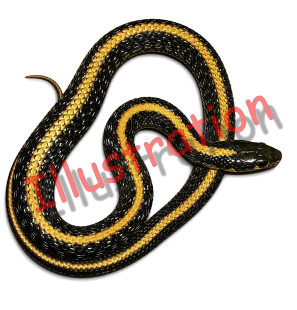
Thamnophis atratus atratus
✅ Species information
• General information: Thamnophis atratus atratus, commonly known as the Aquatic Garter Snake, is the nominate subspecies of Thamnophis atratus. Native to California, it is closely associated with aquatic habitats. It is a diurnal snake that is mainly active near waterways and is particularly well adapted to swimming.
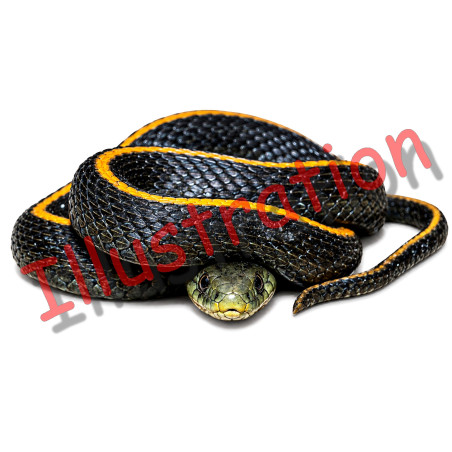
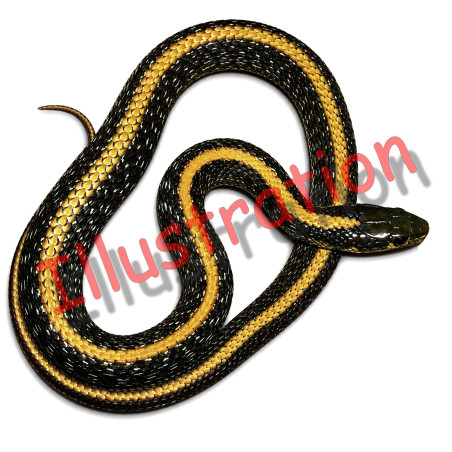
• Special features: This subspecies is distinguished by its strong association with aquatic environments. It frequently hunts in streams and rivers, where it catches fish and amphibians. Its coloration is variable, but generally consists of a dark background with lighter longitudinal stripes.
• Geographical distribution: It is endemic to California, in the western United States. Its range is mainly associated with the San Francisco Bay region and the coastal areas further south, particularly San Mateo, Santa Cruz and Monterey Counties. Its distribution lies further south than that of some other forms of Thamnophis atratus.
• Natural habitat: It mainly inhabits permanent waterways, rocky creeks, moderately to fast-flowing rivers, ponds and vegetated banks. It particularly favours clear water with stones and submerged shelters, as well as banks offering suitable basking opportunities.
• Behaviour: This diurnal, semi-aquatic snake is an excellent swimmer and frequently searches for prey in the water. It may also move along banks and through surrounding vegetation to bask or find shelter. Its diet consists mainly of fish and amphibians, but may include other small aquatic prey. When threatened, it may adopt a defensive posture and release an unpleasant-smelling secretion.
• Distinctive morphological features: The body generally has a dark brownish, olive or blackish background coloration, accompanied by lighter longitudinal stripes. A dorsal stripe and two lateral stripes may be visible, with their colour and intensity varying between individuals. The stripes may display yellowish, cream or greenish shades. The underside is usually lighter and may contain dark spots or markings. Colouration is variable and is not, by itself, a reliable way of identifying the subspecies.
• Sexual dimorphism: Females are generally larger and more robust than males. Males have a proportionally longer tail with a thicker base.
• Size: Adults generally measure approximately 50 to 80 cm in total length. Some individuals can exceed one metre. The documented maximum length for the species Thamnophis atratus is approximately 1.06 m.
• Sexual maturity: Sexual maturity is generally reached after the first few years of growth. The exact timing depends in particular on sex, growth rate and developmental conditions. Specific data for this subspecies are limited.
• Lifespan: Specific data on the lifespan of this subspecies in captivity remain limited. Longevity depends in particular on enclosure quality, diet and general husbandry conditions.